Home / Bihar flood relief
Bihar · Field report · September 2026The same water, one border south.
Forty-six lakh people were under flood across fifteen districts of Bihar. Part of what put them there is rain that fell on Nepal — the catchment we spent the first half of September working below. On our way back from Nepal we went to Bihar. In the village of Bakia Sukhay we were the first to arrive with relief in about ten days, and what we carried, for more than 500 people, was not enough for a village of about 7,000. The appeal that followed has since closed; this page is kept as the record.
Closed · last updated 2 October 2026. The Bihar Flood Relief 2026 appeal closed on 2 October 2026 without any of its money being spent. This page is kept as the field record.
12A & 80G registered · 80G receipt emailed automatically · this year we ran flood relief in Assam for 300+ families and worked in Nepal alongside KarmaYog Foundation. See what we did in Assam →
Situation figures are the Bihar Disaster Management Department's own, dated and sourced at the foot. Photographs tagged Bihar are ours, from Bakia Sukhay; the rest are our own work in Assam or Nepal, labelled as such.
Forty-six lakh people, and it doubled in four days
Every number below is from the Bihar Disaster Management Department's bulletin as reported on 11 September 2026. We publish the state's figures because only the state counts all fifteen districts. Our own numbers cover one village, and they are in the field report below.
The fifteen districts: Patna, Bhojpur, Saran, Vaishali, Bhagalpur, Begusarai, Buxar, Samastipur, Munger, Katihar, Lakhisarai, Khagaria, Purnea, Madhepura and Araria. Three of them — Araria, Purnea and Katihar — are a few hours' drive from our base in Siliguri. That proximity is the only reason a foundation our size has any business looking at Bihar at all.
No death toll appears here on purpose. The state has not published one for this event, and the figures circulating online belong to earlier Bihar floods. We would rather leave a gap than fill it with a number from 2017.
Why the number keeps moving
On 7 September the department's count was around 27 lakh people across 13 districts. On 11 September it was 46.88 lakh across 15. Nothing was corrected in between; the water simply kept spreading. Any figure you read on this page, including the ones above, is a photograph of one morning. We will restate them with a new date rather than quietly editing the old ones — the revision log at the foot records every change.
The state's own explanation names two causes: incessant rain across Bihar, and heavy downpour in Nepal's catchment areas. The rivers that drain the Nepali hills — the Kosi, the Gandak, the Bagmati, the Mahananda — do not stop at the border, and neither did this. We spent the first half of September working below that catchment on the Nepali side. This is the same weather, arriving downstream.
Bakia Sukhay: ten days without relief, and we were the first to arrive
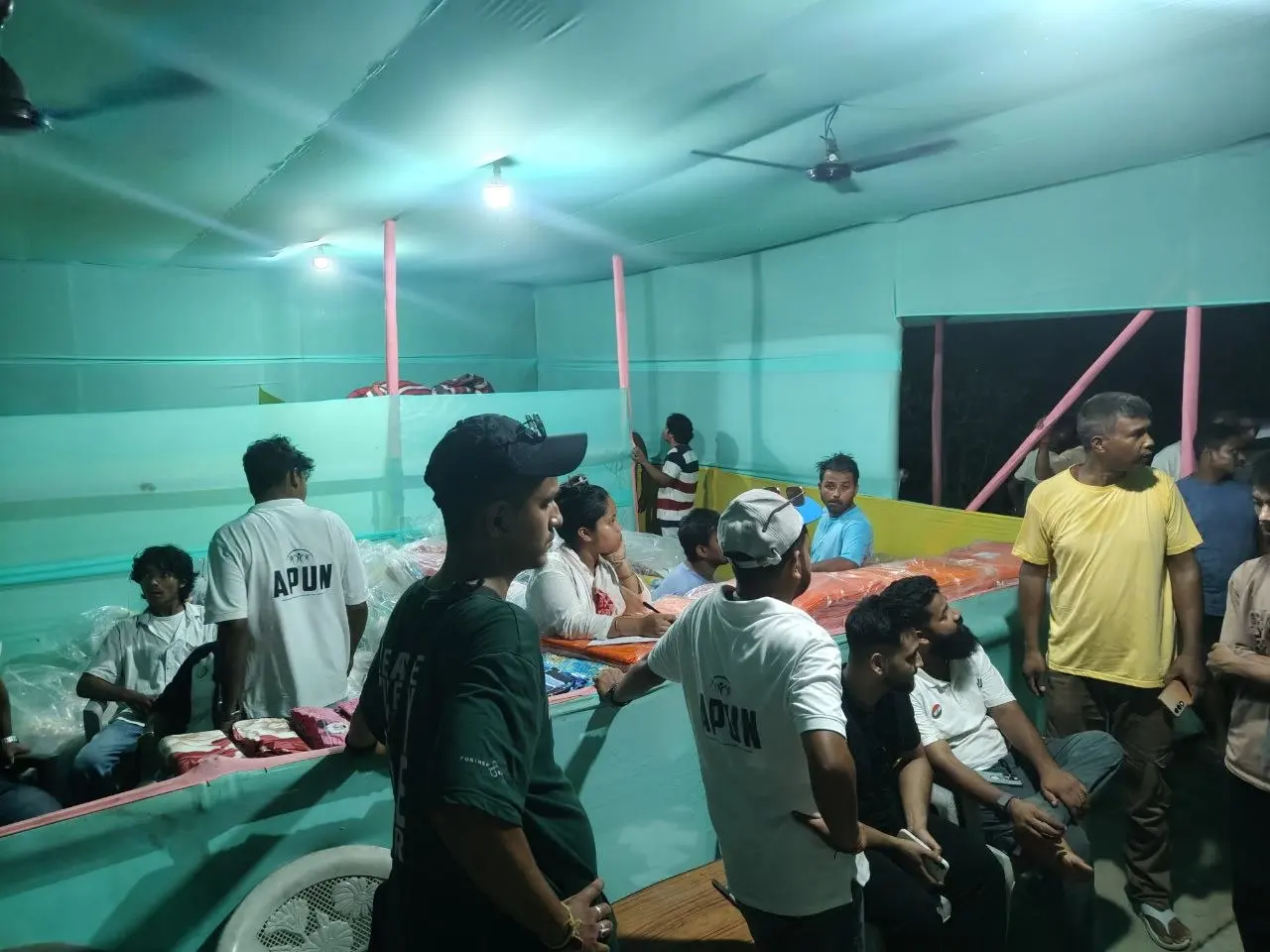
We came back from Nepal to hear that Bihar was not getting the relief Assam and Nepal had. So we went straight there, to the village of Bakia Sukhay, around 19 September 2026. Getting in meant a boat. The neighbouring village was entirely under water, taken by the Ganga, and we crossed over it to reach Bakia Sukhay.
People there had received no relief for about ten days. We were the first to arrive with any. We had brought relief for more than 500 people. The village has about 7,000 residents, by the village mukhiya's count. It was not enough, and we will not pretend otherwise.
As the relief came off the boat, people took it from our hands. We are recording that because it happened, and because of what it shows. Bihar receives so little relief against the need that people there know they may get none at all, so they take what they can while it is in front of them. That is what ten days of waiting does. It says nothing about the people of Bakia Sukhay.

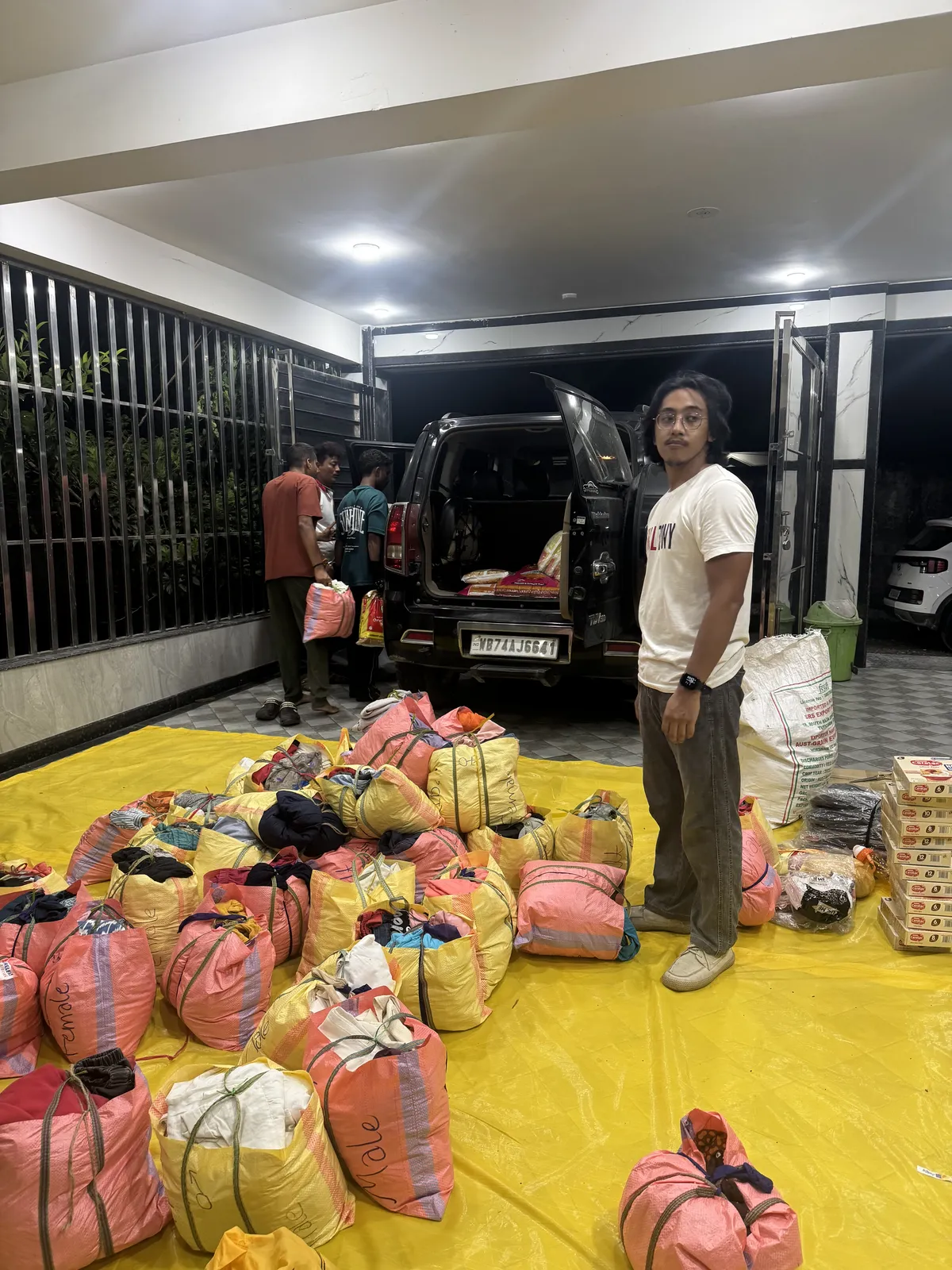
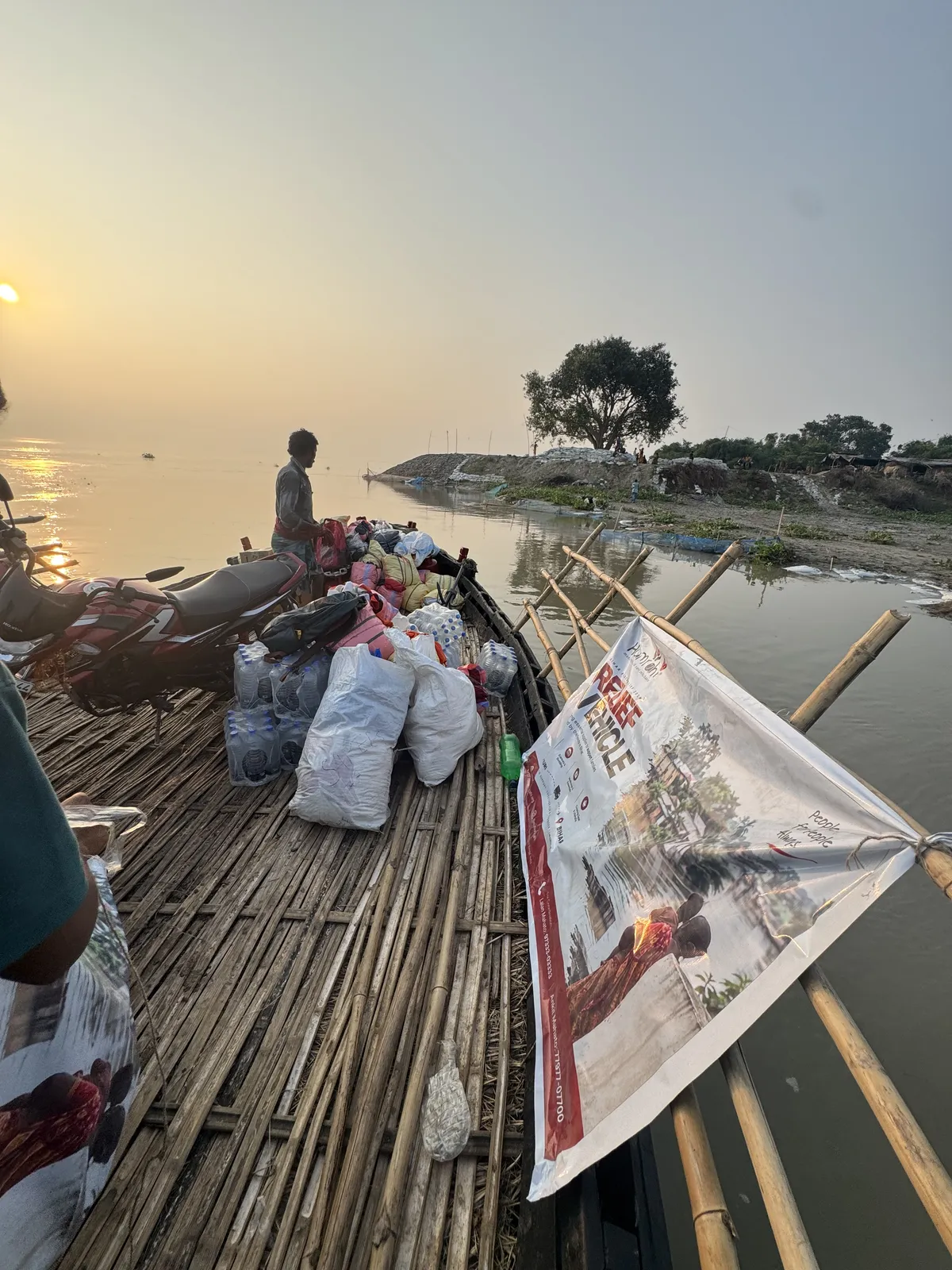
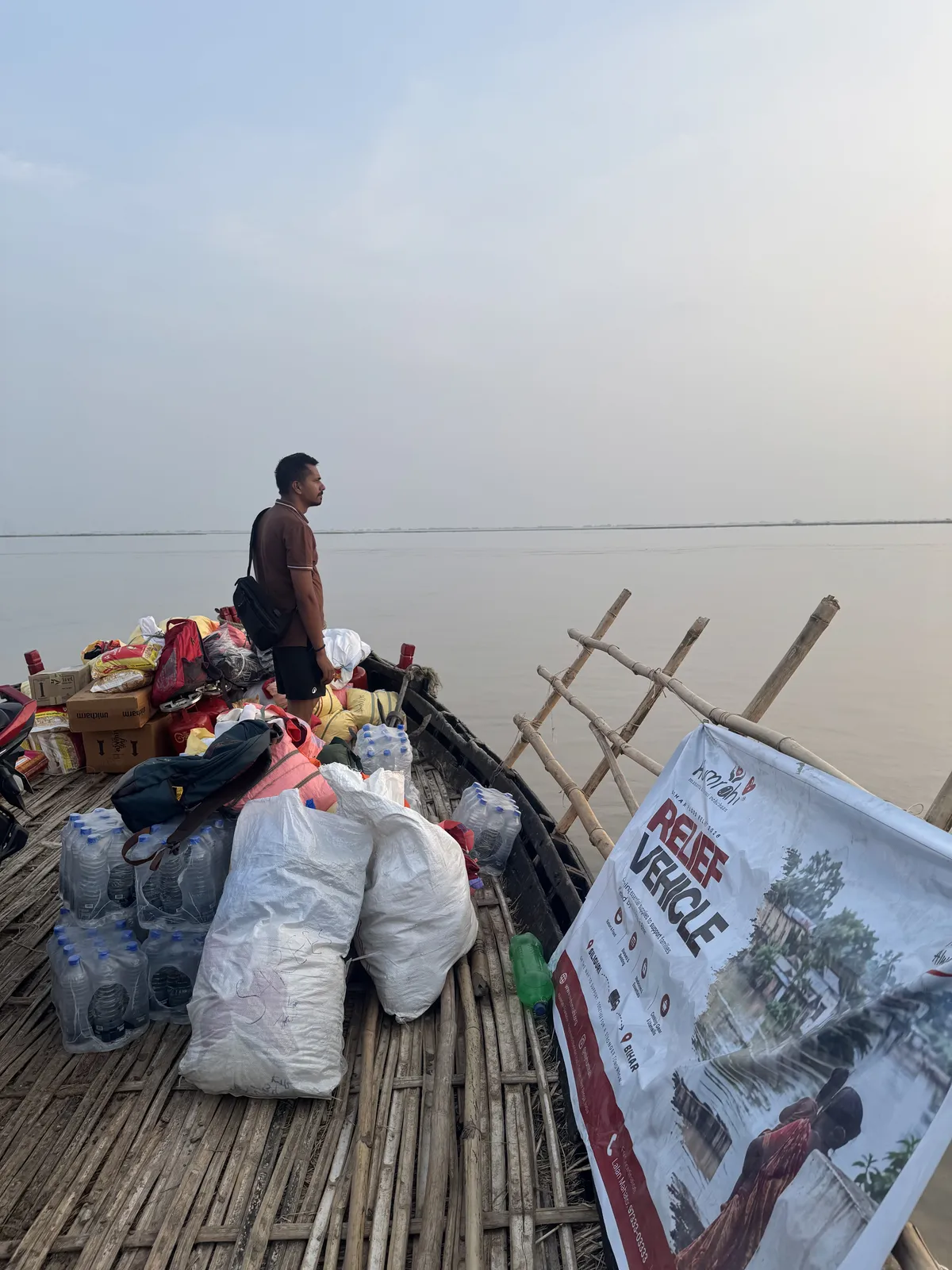
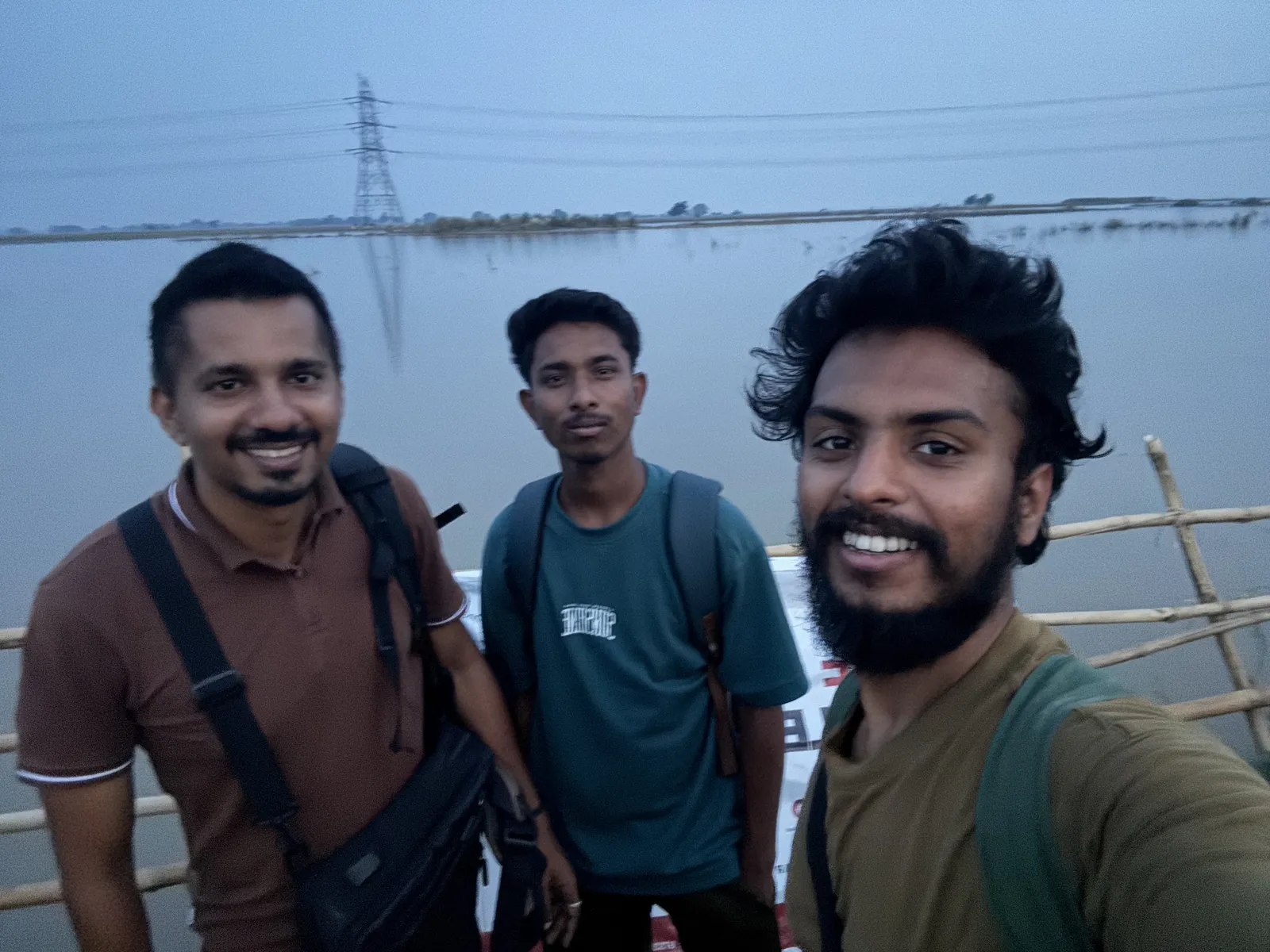
These are our own photographs from the trip. We have left out the frames in which people in Bakia Sukhay are the subject; they did not ask to be in an appeal.
Who we worked with. We had no partner organisation in Bihar. The only people we worked with there were the local government and administration. Our usual way is to go in behind an organisation that already knows the area, as we did with Nine Story Foundation in Assam and KarmaYog Foundation in Nepal. In Bakia Sukhay nobody had come with relief in ten days, and waiting for a partner would have meant more days without it.
Who paid for it. The load was relief material collected for Nepal that could not cross the border, plus supplies Humrahi bought with its own resources. No Bihar appeal donation has been spent. The appeal closed on 2 October 2026 with its two gifts still untouched; see the closed note for what that means for donors to it, under the sixty-day undertaking dated 12 November 2026.
The two responses that came before it
Every frame and every second of footage below is from Assam or Nepal, not from Bihar, and all of it is ours. Bihar came third this year, straight after Nepal. These are the two responses it grew out of.
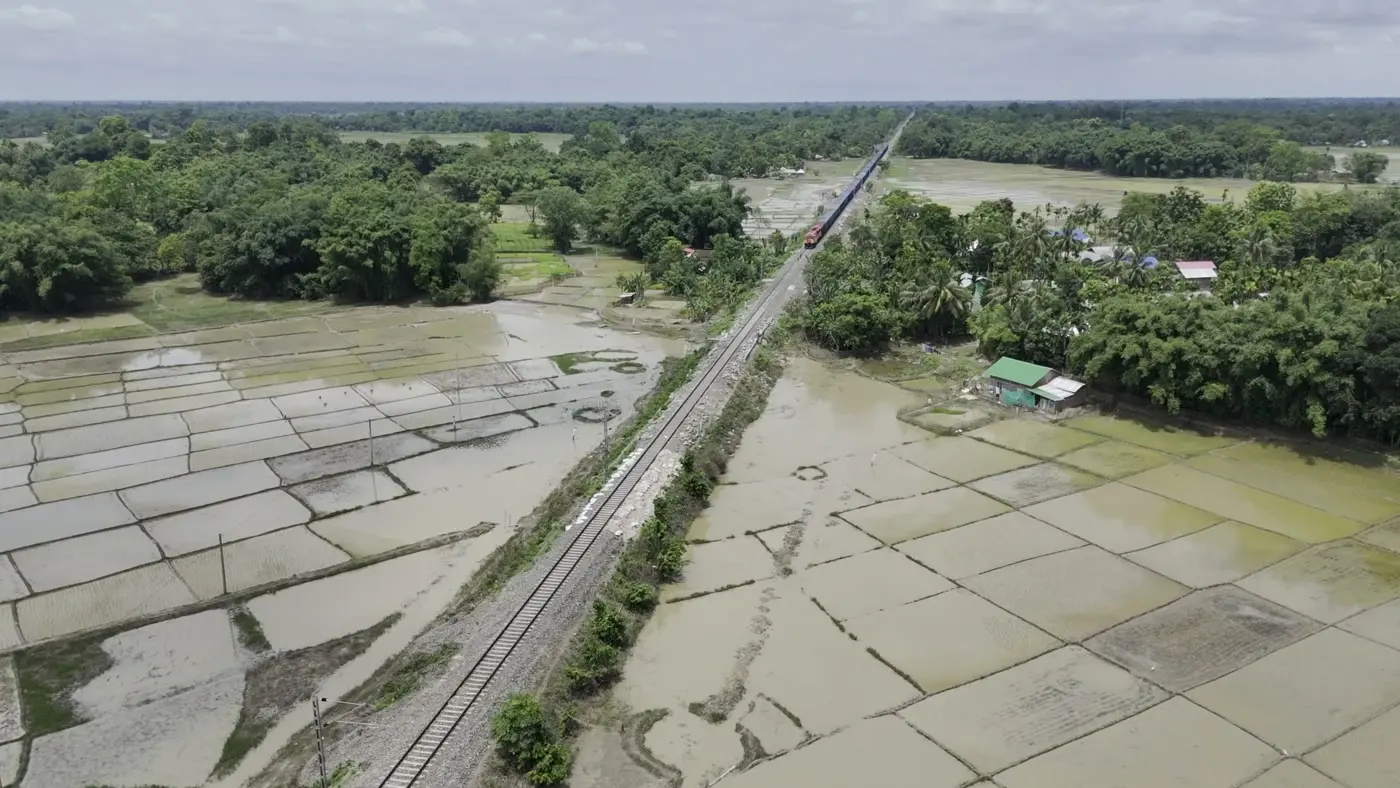
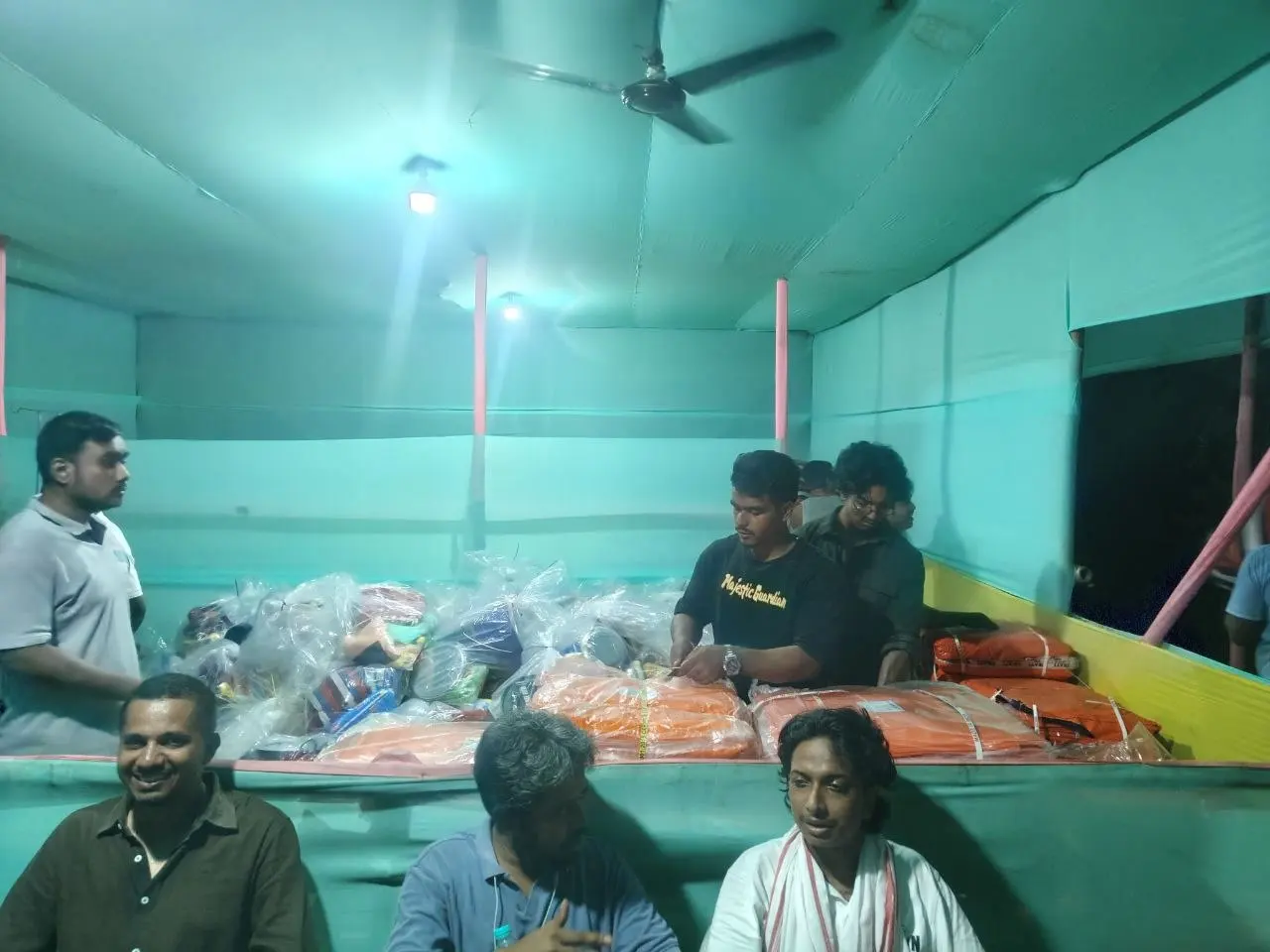
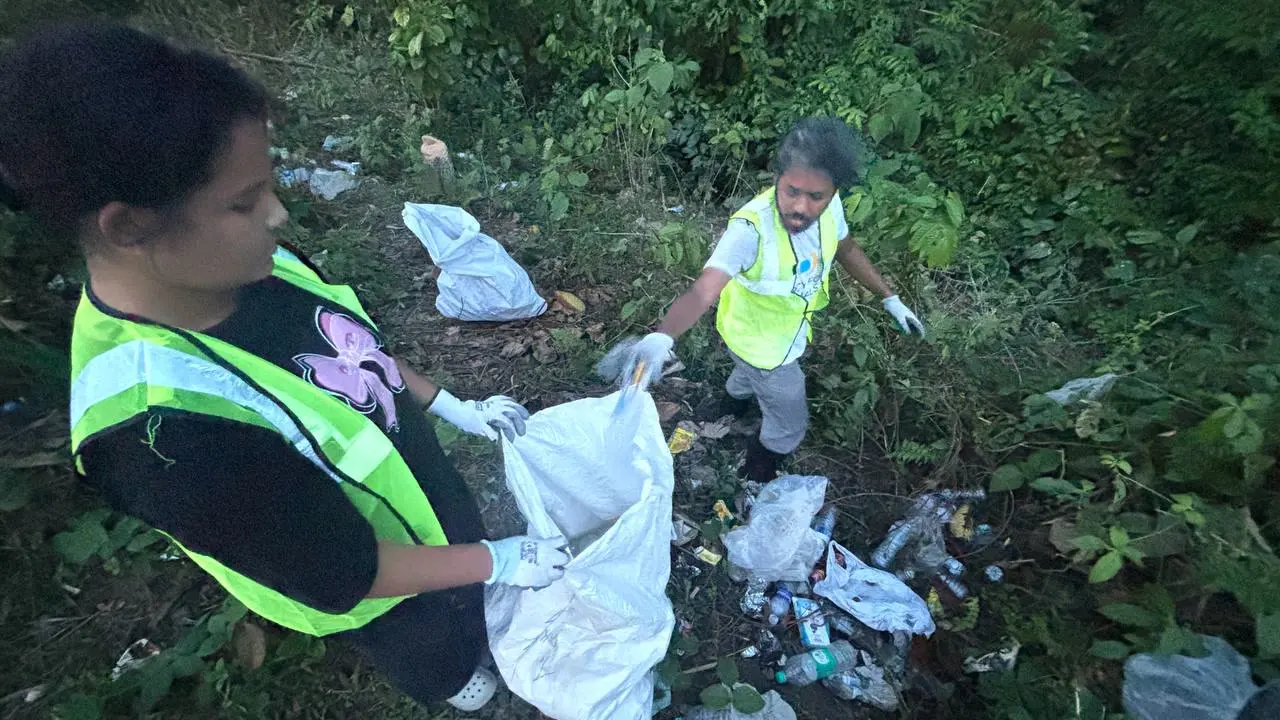
The Assam work is documented in full, with its sources and the figures that are not ours, on the Assam field report.
We went without a partner. We would rather not go back without one
Bakia Sukhay was reached with no organisation on the ground beside us, only the local administration. That was a choice made because nobody had come in ten days, not a way of working we want to keep.
So we are still looking for an organisation already working in the flooded districts of Bihar — a local NGO, a relief collective, a gurudwara or temple trust running a kitchen, a panchayat-level group, anyone who is already there and can account in writing for what they distribute — for any future response, not tied to this closed appeal. Preference for Araria, Purnea, Katihar, Madhepura or Khagaria, because our vehicle can reach those and come back.
What we are offering is small and specific: money towards supplies, a vehicle out of Siliguri, and people who will work the distribution rather than photograph it. What we are not offering is a logo on somebody else's work.
- You run or know such a group. Tell us who they are. We will do the checking.
- You are from one of these districts. You know who is actually turning up. That is information we cannot buy.
- You work in relief or government there. Tell us what is already covered, so we do not duplicate a kitchen that exists.
This appeal is closed
Closed · 2 October 2026. The Bihar Flood Relief 2026 appeal closed on 2 October 2026 without any of its money being spent — it held two gifts, both untouched. As promised when the appeal opened, if we had not begun spending it in Bihar within sixty days of opening (12 November 2026), we would say so on this page and contact every donor to it with the choice of a refund or of redirecting the gift to our work in Siliguri. We are honouring that now, ahead of the date: every donor to this appeal is being contacted with that choice.
The one trip we made, to Bakia Sukhay, ran on relief material left over from Nepal and on Humrahi's own money, not on gifts to this appeal — the field report above stays as the record of it. To support Humrahi's current work, see the general donate page.
Three strands, and how far along each honestly is
The same three-column status we published for Nepal, kept for Bihar so the two can be compared.
Raising money
The appeal closed on 2 October 2026. It held two gifts, and not a rupee of either was spent: the trip ran on leftover Nepal goods and our own money. Both donors are being offered a refund or a redirect, under the sixty-day undertaking dated 12 November 2026.
Read the closed note →Taking relief in
One trip, by our own vehicle and then by boat, to Bakia Sukhay: relief for more than 500 people in a village of about 7,000. The report is above, including the part that did not go well.
Read the field report →Finding who to stand behind
We had no partner organisation in Bihar and worked only with the local government. For the next trip we want somebody already in the districts who can tell us where relief is not reaching and account in writing for what goes out.
Introduce us →The Bihar goods collection has also closed
The one load we carried to Bakia Sukhay ran on relief material left over from Nepal and on supplies Humrahi bought itself, not on anything collected for Bihar through this page. With the appeal closed, we are not collecting goods for Bihar any more. Our Siliguri collection point still runs year-round for local work — see the donate goods page if that is what you are looking for.
Questions worth asking before you give
Have you actually been to Bihar for this flood?
Who paid for that trip, and has my donation been spent?
Did you work with a partner organisation in Bihar?
Where do your figures come from?
Are the photographs on this page from Bihar?
What is the connection to your Nepal work?
Can I still give goods for Bihar?
Where every number here came from
- Bihar Disaster Management Department bulletin, reported 11 September 2026 — 46.88 lakh people affected across 561 gram panchayats and 88 blocks in 15 districts; 1,194 community kitchens; 15 relief camps holding 11,255 people; 3.10 lakh polythene sheets and 48,300 dry-ration packets distributed; 1,922 boats; 27 SDRF and 10 NDRF teams; the Ganga at Sultanganj, Bhagalpur at 36.62 metres, 2.12 metres above danger level. Reported by ThePrint and Business Standard, both attributing the figures to the department.
- The earlier count, 7 September 2026 — approximately 27 lakh people across 13 districts, which is how we know the figure roughly doubled in four days rather than being revised. Business Standard.
- The cause, as the state gives it — incessant rain across Bihar coupled with heavy downpour in Nepal's catchment areas. Attributed to the department in the reporting above.
- Our own responses, for comparison — the Assam field report (Mautgaon, Sivasagar, 15–17 August 2026) and the Nepal appeal and field report (Trishuli, Nuwakot and Badravati, from 31 August 2026). Both carry their own sources.
- Our own Bihar trip, September 2026 — Bakia Sukhay: relief carried for more than 500 people by a Humrahi team, with no partner organisation. The village's population of about 7,000 is the village mukhiya's figure, not a census. Photographs tagged Bihar are ours from that trip.
What we are and are not claiming. We have been to one village in Bihar, Bakia Sukhay, with no partner organisation, and carried relief for more than 500 people there. That figure, and the mukhiya's count of about 7,000 residents, are the only Humrahi numbers here; every situation figure on this page is the state's. We publish no death toll.
Revision log
Append-only. Figures get restated with a new date and a new row, never edited in place.
| When | What changed | Humrahi status at that date |
|---|---|---|
| 13 Sep 2026 | Page created. Situation figures set from the Bihar DMD bulletin of 11 September 2026 (46.88 lakh, 15 districts). No death toll published. | No partner, no purchase, nothing moved, no field presence. |
| 1 Oct 2026 | Field report added: Bakia Sukhay, relief for more than 500 people against about 7,000 residents (village mukhiya's count). Our own Bihar photographs added. Situation figures unchanged, still the bulletin of 11 September 2026. No death toll published. | One trip made, around 19 Sep 2026. No partner organisation (local government only). Paid for from leftover Nepal goods and our own resources; no Bihar appeal donation spent. Refund undertaking to 12 Nov 2026 stands. |
| 2 Oct 2026 | Appeal closed. It held two gifts; neither was spent, and both donors are being offered a refund or a redirect under the sixty-day undertaking (12 Nov 2026), honoured early. The donate buttons, amount chips and the goods collection for Bihar have been removed from the page. Situation figures, field report, photographs and sources are unchanged and kept as the record. | Appeal and goods collection closed. Field work from 19 Sep 2026 stands as the record. |