Every Child Deserves a Place to Play

Everyone funds the classroom. Hardly anyone funds the playground.

Many small schools and children's homes in North Bengal have nowhere safe for children to run. We want to change that, one ground at a time: clear and level the land, then add simple play equipment made from upcycled tyres and scrap, with volunteers doing much of the work.

  • 80G eligible
  • CSR-1 registered
  • Working in Siliguri since 2020
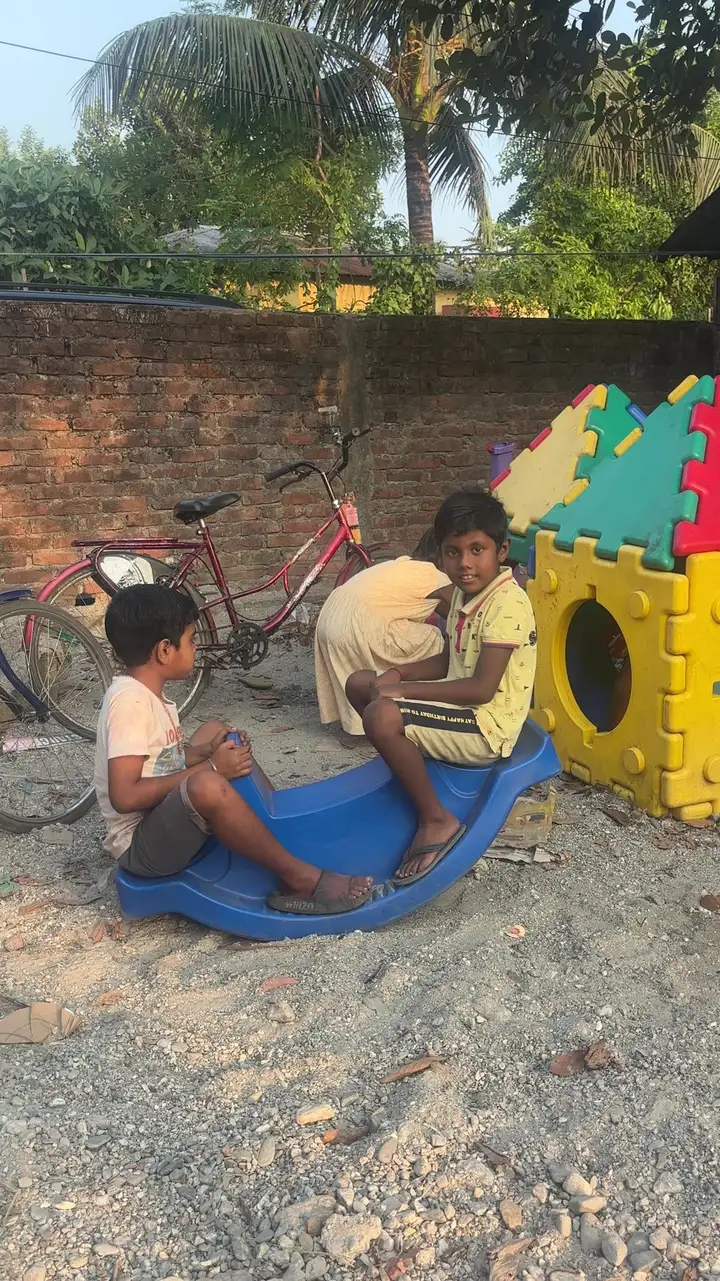
Two children play on a blue plastic rocker on bare, levelled ground at Hasir Thikana school in Siliguri, with colourful plastic play blocks behind them and a brick wall and palm trees beyond. Hasir Thikana, 2 Oct 2026
Children at our first ground
96
Children at the next site
70
Active play a child needs
60 min a day
Play is a right
UNCRC Art. 31
01Why play matters

Children need more than good marks.

We tend to measure a child's future in marks and exams. Education matters, but children also need healthy bodies, calm minds and time to play. Not every child goes home to an easy day. On a playground, for a while, those worries can wait: a game of football, a race with friends, a turn on the swing.

Plenty of people will pay for books, desks and classrooms. Very few think to pay for the ground outside, and many small schools have no playground at all. Some have a patch of land that is overgrown, stony or unsafe. With a little work, that patch can become the best part of a child's day.

  • 1 in 3

    Mental health starts early

    A 2024 WHO and UNICEF report found that one third of mental health conditions emerge before age 14, and half before 18.

    WHO and UNICEF, 2024
  • 60 minutes

    Active children learn better

    WHO recommends that children aged 5 to 17 get an average of at least 60 minutes of moderate to vigorous activity a day, and links it with better fitness, thinking skills, school performance and fewer symptoms of depression.

    WHO, 2020
  • Article 31

    Play is a child's right

    The UN Convention on the Rights of the Child recognises every child's right to rest, leisure and play. Play is part of growing up, and children are owed time for it.

    UN Convention on the Rights of the Child
02What we build

A tyre playground for schools, built from what's already there.

Every site is different, so we plan each one with the school. The work always starts the same way, by making the ground safe.

  1. Clear

    Weeds come out first, then stones, rubble, gravel and litter. This is most of the labour, and volunteers do it by hand.

  2. Level

    We level the soil so a child can run flat out without tripping on anything.

  3. Build

    Where the school wants it and there's room, we add play equipment made from old tyres and scrap.

  4. Play

    The ground goes back to the children. At Hasir Thikana, all 96 of them had it to themselves on 2 October.

29 Sep 2026
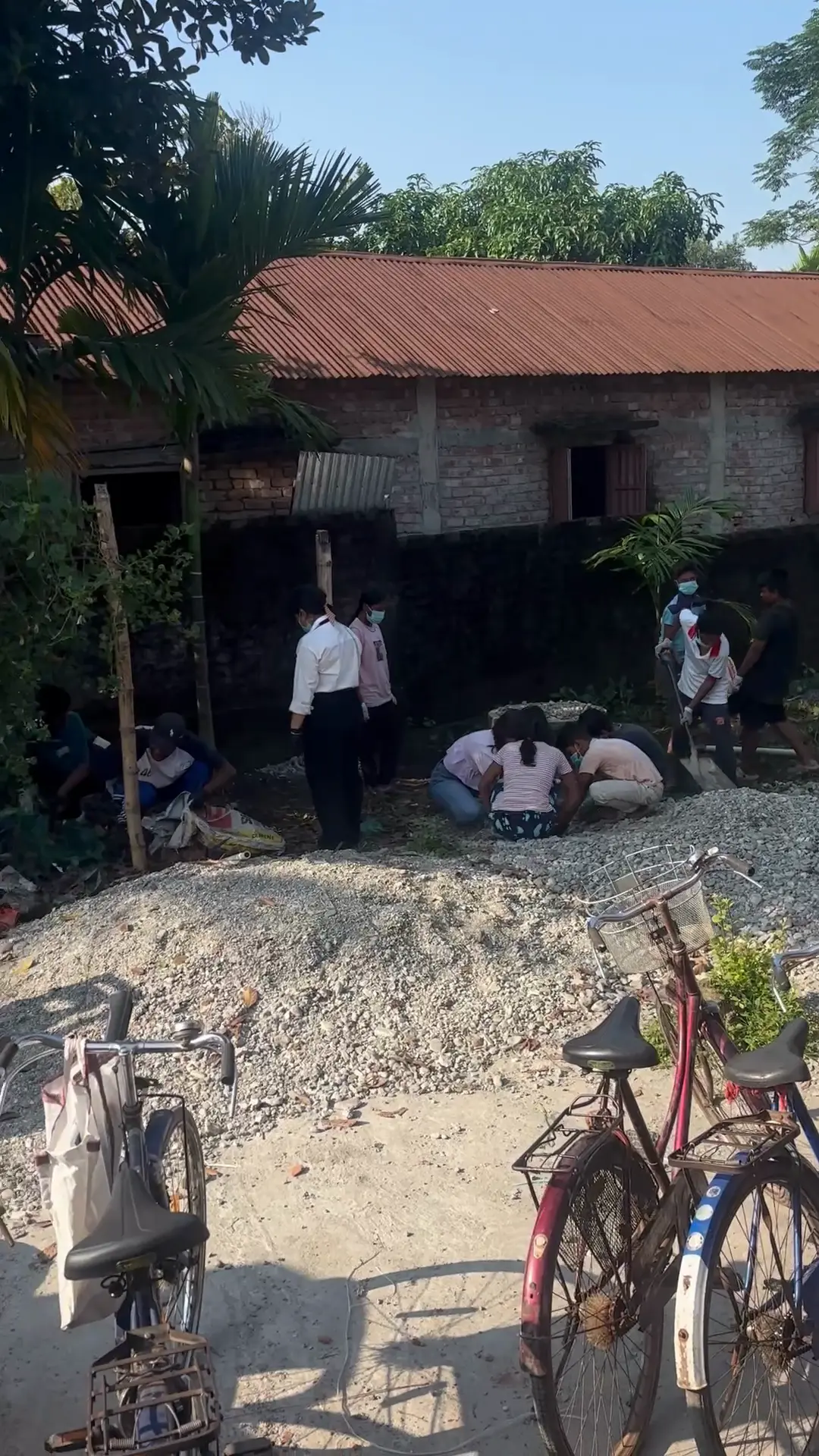
Day one at Hasir Thikana, 29 September 2026. Shovelling gravel and rubble off the ground.
The ground at Hasir Thikana in Siliguri on 29 September 2026, covered in heaps of gravel and rubble. Bicycles are parked in the foreground and children sit near the school building at the back.Before
Before: the ground on the first morning, 29 September.
Two children play on a blue plastic rocker on the cleared, levelled ground at Hasir Thikana on 2 October 2026, with plastic play blocks behind them and a brick wall beyond.After
After: the cleared, levelled ground on 2 October.

At Hasir Thikana we stopped after step two. The ground was cleared and levelled and a library corner was set up, but no swings or slide went in.

What a playground can include

We haven't built any of these yet, so there are no photos of them. We'll add some once the first ones are in.

  • Tyre swings

    Swings made from upcycled tyres.

  • Tyre seating

    Painted tyres turned into seats, for resting between games.

  • A slide

    Where the site has room for one.

  • Space for football

    An open patch for football and running games, like the Tyre Football setup at Nataraj Gurukul.

  • Tyre planters

    Painted tyres that hold flowers and vegetables, like the ones the children at Nataraj Gurukul are painting.

Local to North Bengal

We work around Siliguri, in the Darjeeling hills, the Terai and the Dooars. When we looked, we couldn't find anyone else here building tyre playgrounds for small schools.

Built by volunteers

Volunteers from Humrahi, Plogwarts, Support Wings, the Inspiria NSS Committee and others do much of the work, so a playground costs far less than a park built by a contractor.

Inspired by a partner

The idea draws on work like our partner KarmaYog Foundation's Interactive Playscape Project in Nepal, which used recycled tyres and scrap at a school in Itahari.

03Where we've been, where we're going

One ground cleared. The next one this month.

Done · 2 October 2026

Hasir Thikana, Siliguri

96 children

Siliguri Unique Social Welfare Society runs Hasir Thikana, a free school in Hatiyadanga for 96 children aged 5 to 14. Its open ground was overgrown with weeds and scattered with loose stones, sharp rubble and litter. With Support Wings, our volunteers cleared and levelled it.

  1. Day one. Volunteers start pulling weeds and shovelling gravel and rubble off the ground.

  2. Two more days of picking out stones, rubble and litter, then levelling the soil.

  3. Community day for all 96 children: the new ground, a library corner stocked by a book drive across Siliguri, haircuts, face painting, a film and fresh food.

We didn't add swings or a slide there. That ground was the start, and it showed us what a cleared patch can do. Read the full record of the Hasir Thikana project.

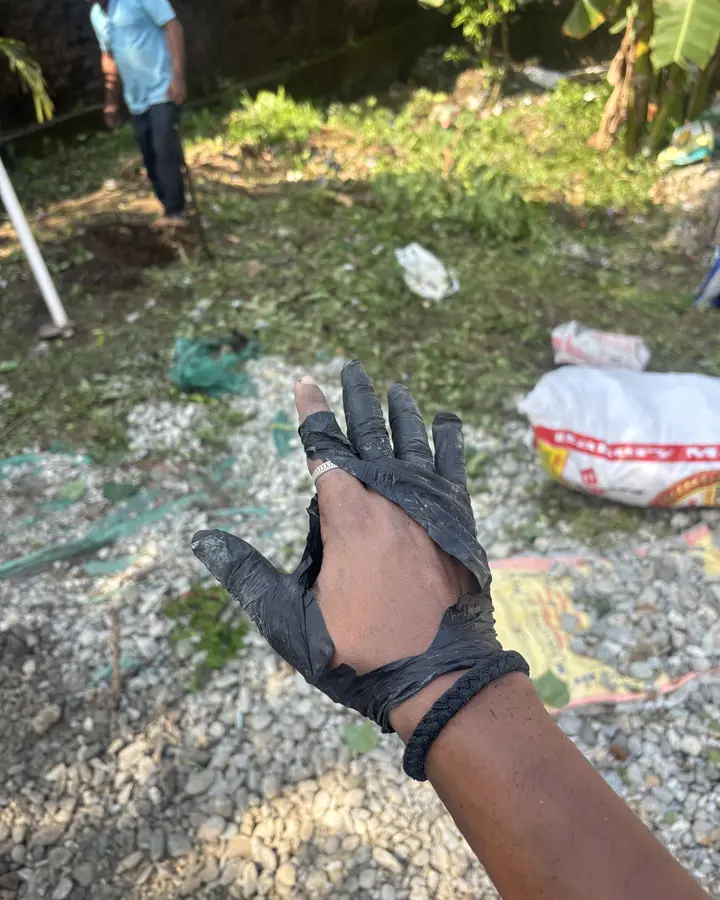
29 Sep: clearing the garden.
A volunteer holds up a black work glove torn open across the palm, with gravel and sacks of rubble on the ground behind.
29 Sep: a glove after day one.
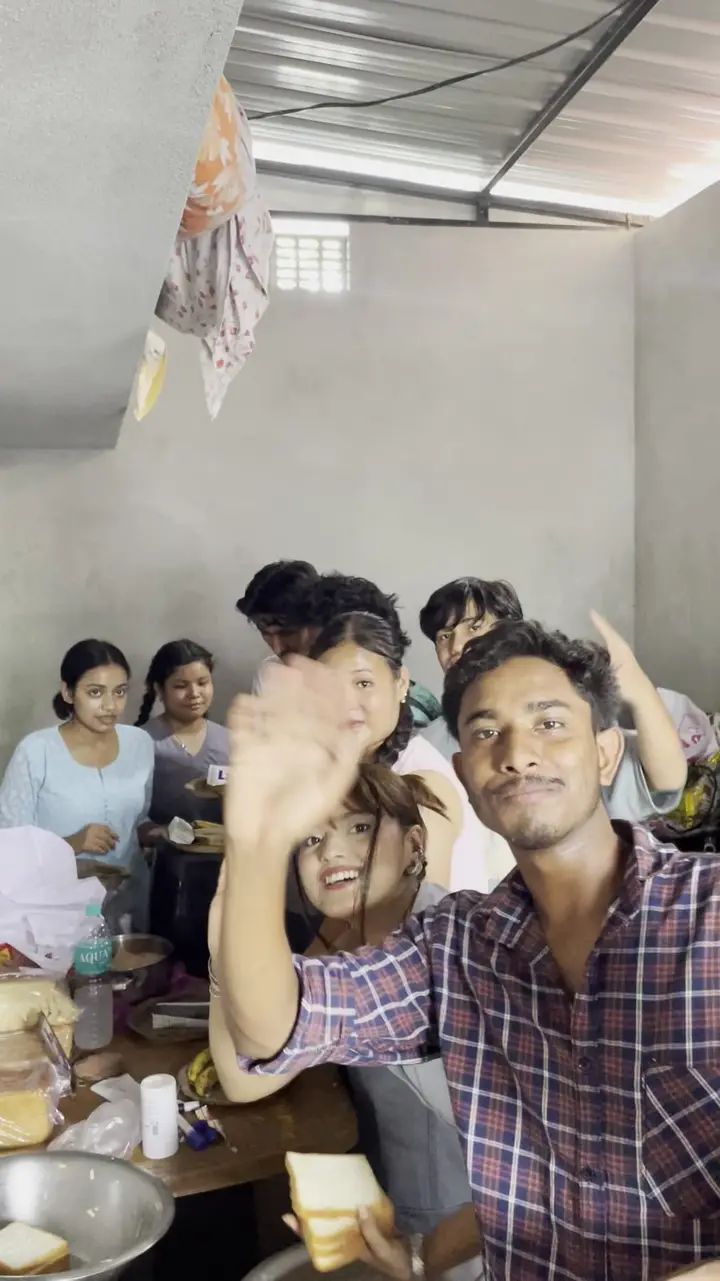
Volunteers making sandwiches at a table inside Hasir Thikana, one of them smiling and waving at the camera.
2 Oct: sandwiches for every child.
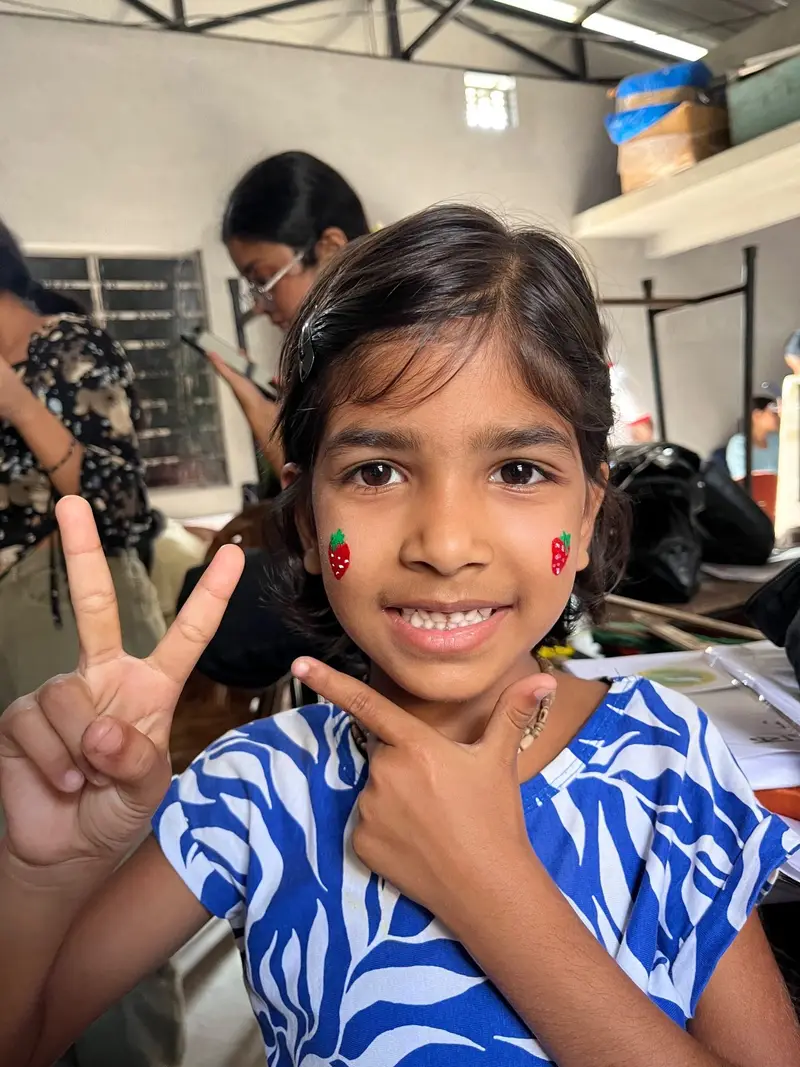
A smiling girl with painted cheeks makes a peace sign at the Hasir Thikana community day in Siliguri.
2 Oct: face painting.
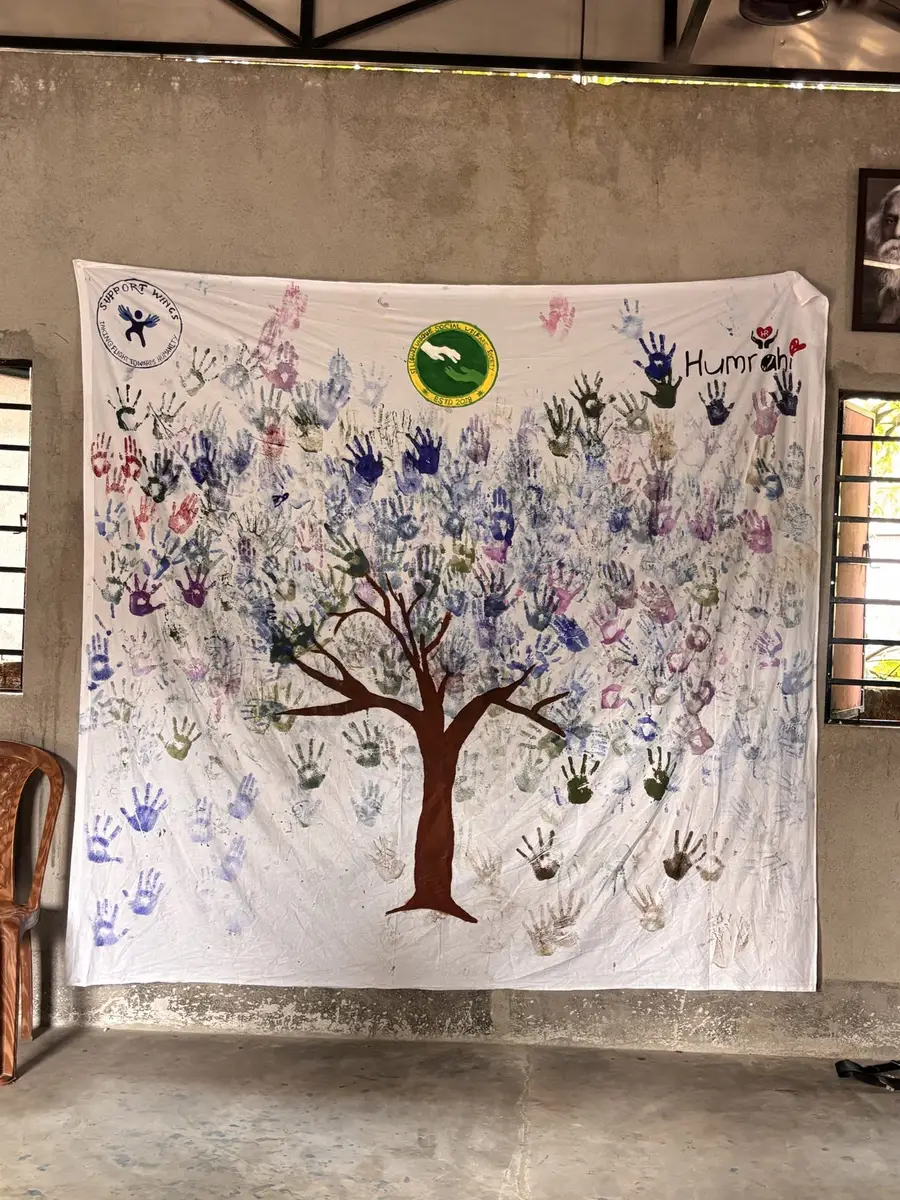
A large painted tree on a white sheet whose leaves are dozens of children's coloured handprints, hanging on the wall at Hasir Thikana.
2 Oct: the handprint tree all 96 children made.
Next · 14 November 2026

Nataraj Gurukul, Mirik

70 children

Nataraj Gurukul sits on a forested hilltop at Dhajea Busty near Mirik and teaches 70 children from the tea gardens and the Balasun Valley. On Children's Day we are taking a fair up the hill with our partners, and two things stay behind when we leave.

  1. Humrahi volunteers visit the gurukul and meet the children.

See the Nataraj Gurukul Children's Day fair.

3 Nov visit: the terraced garden.
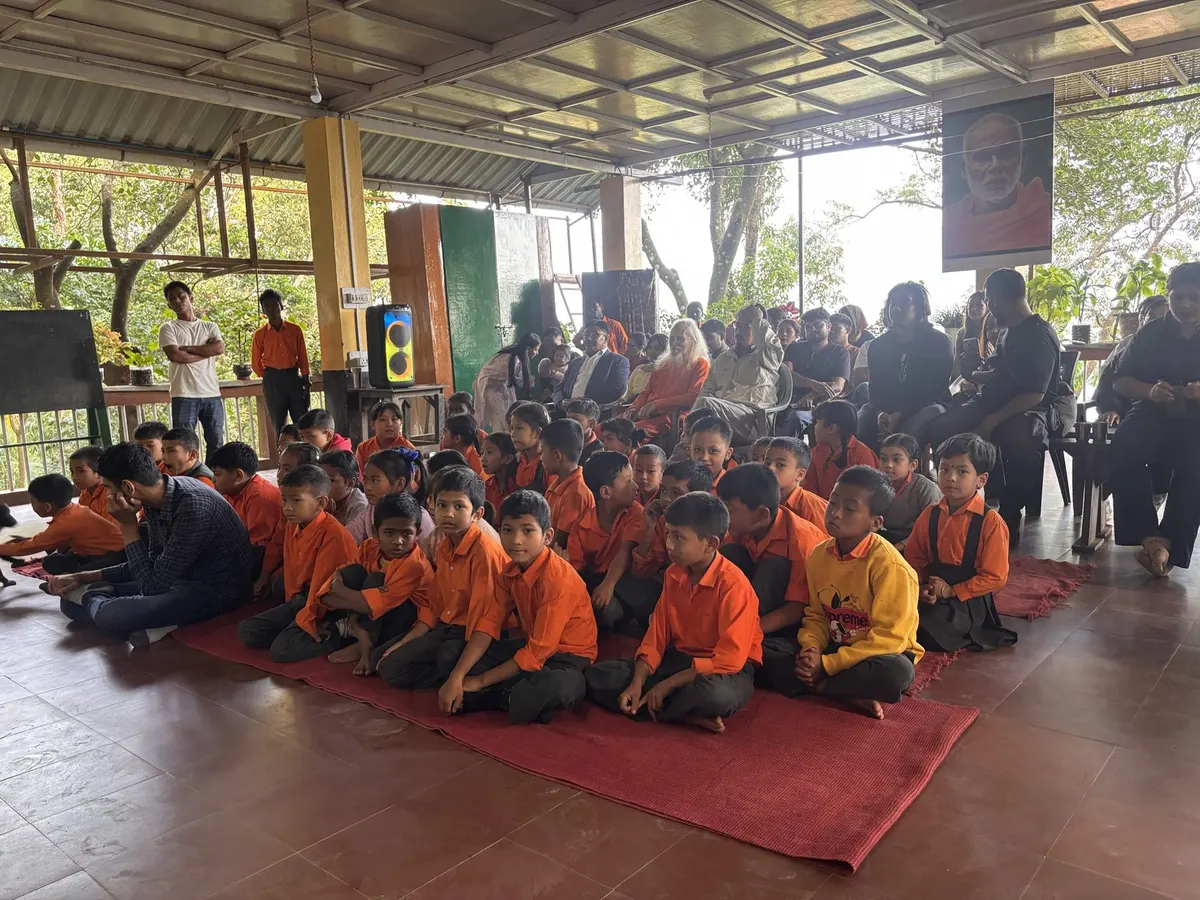
Rows of students in orange uniforms sit on a red carpet in the open hall at Nataraj Gurukul.
3 Nov visit: the open hall.
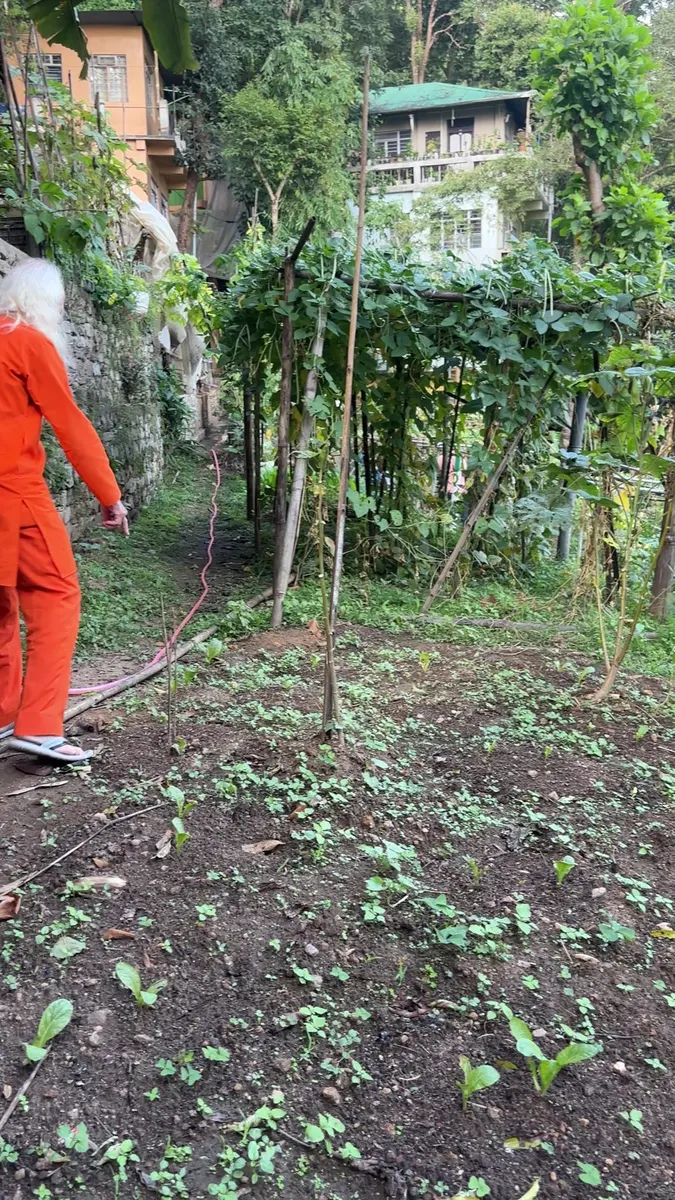
Rows of young vegetable plants in the garden at Nataraj Gurukul, with school buildings above.
3 Nov visit: where the planters will go.
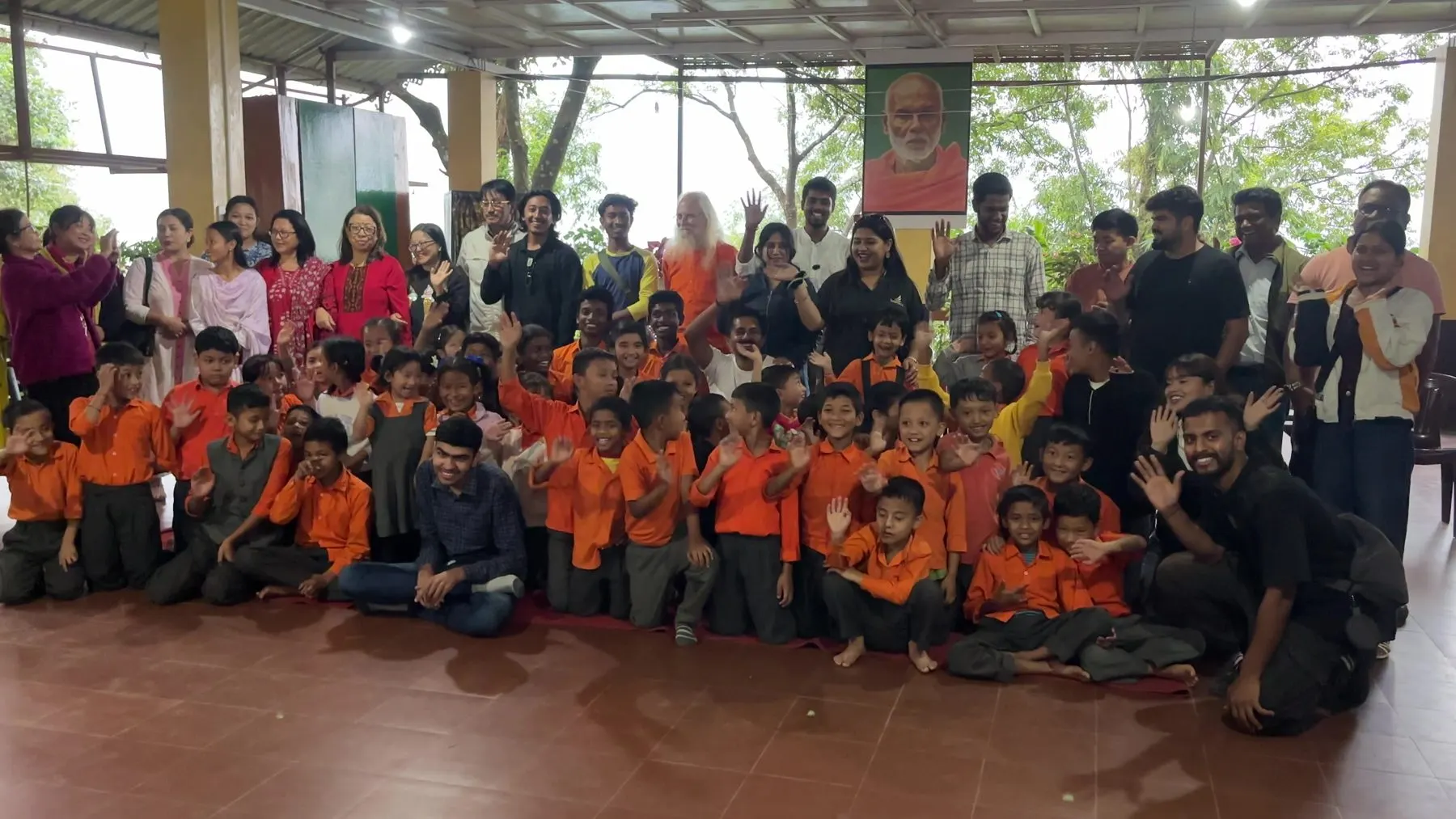
Students of Nataraj Gurukul in orange uniforms sit on the floor of the open hall, with Swamy Mick and Humrahi volunteers standing behind them.
Nataraj Gurukul with Humrahi volunteers on our 3 November visit.
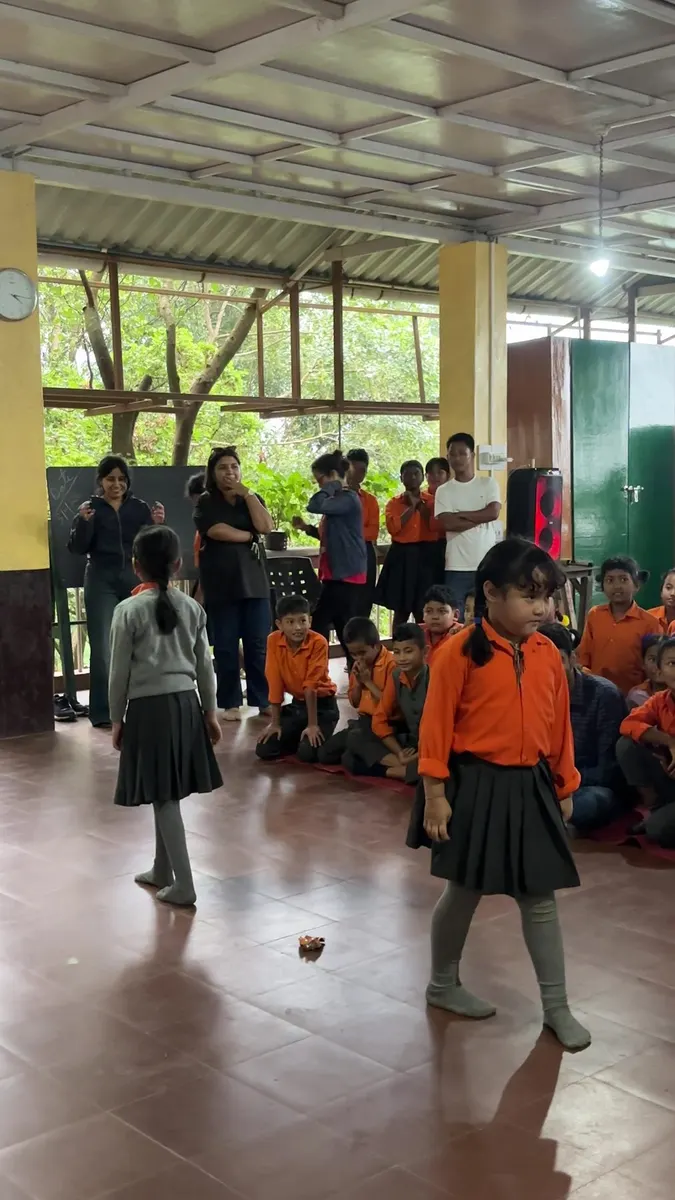
Children of Nataraj Gurukul performing for their schoolmates in the hall.
Children performing in the hall at Nataraj Gurukul.
04A stage as well as a ground

Where a school has talent, we help give it a stage.

A playground gives children room to run. Some of them also want to sing, dance or stand up in front of everyone and speak. So alongside the ground, we help schools put on a talent show.

The first is at Nataraj Gurukul on 14 November 2026. The gurukul runs it and Humrahi supports it, and every child who takes part gets a gift from Unnati Foundation.

05Who builds it

Many hands, and a lot less money.

At Hasir Thikana, 22 volunteers worked alongside the centre's own team. Youth groups and a local business joined in. Most of the labour is given free, and that is where most of the saving comes from.

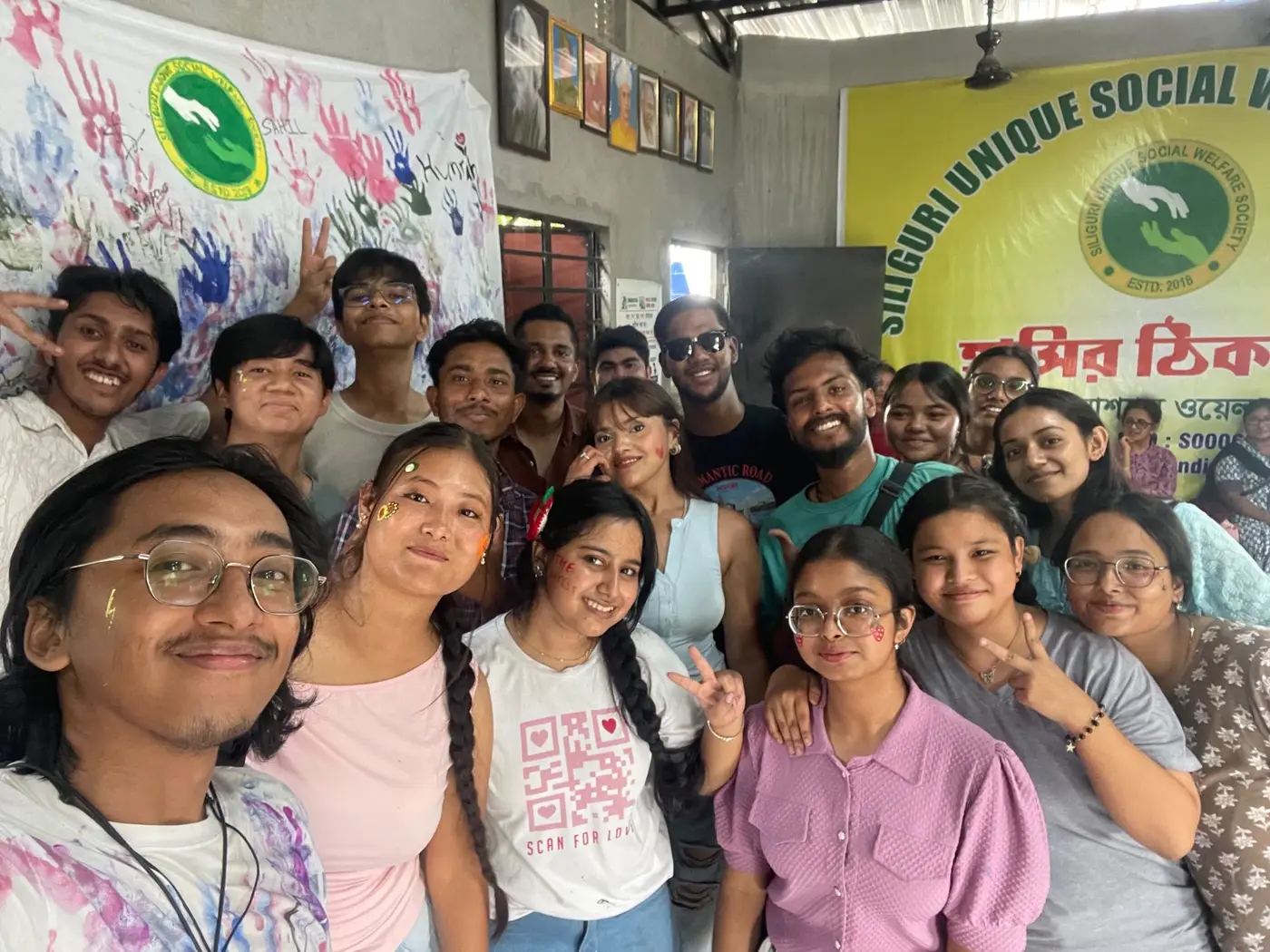
A crowd of young volunteers from Humrahi, Plogwarts and Support Wings smile for a group photo in front of the Siliguri Unique Social Welfare Society banner.
Volunteers from Humrahi, Plogwarts and Support Wings on 2 October.

Small free schools and NGOs

Schools that teach children whose families can't pay, and that have no money left over for a playground.

Homes for rescued children

We want to work with homes for rescued children too. We will never publish a photo in which a child from one of these homes can be recognised.

06Donate a playground

Fund a whole ground, or one piece of it.

You can pay for an entire playground or just one part of it, such as a swing or a slide. Pay right here by UPI, card or netbanking. The form is run by Seva Stack, the donor system behind every Humrahi gift, and the payment goes through Razorpay.

Humrahi Foundation is a registered public charitable trust with 12A, 80G, CSR-1 and NGO Darpan registration. Your gift is eligible for 80G, and the receipt comes by email. How we report money.

Form not loading? Donate on Seva Stack's page instead. Or see the campaign page.

07Other ways to help

Bring a playground to a school near you.

Companies and CSR

A CSR playground project for a school near your office or plant. Your team can help build it on the day. Use the form below.

Volunteer

Lend a hand with clearing, painting and building, or spend a day playing with the children. Become a Humrahi.

Schools, clubs and groups

Schools, clubs and community groups can adopt a ground together. Tell us who you are and where.

Tell us about a school

Know a school or children's home with nowhere to play? Want to partner with us? Leave your details and we'll get back to you. You can also write to a@myhumrahi.org.

Questions

Questions people ask us

What is a tyre playground?

It is a play space made mostly from old tyres and scrap: swings, seating, planters and a football space, on ground we first clear and level. Old tyres are strong, cheap and easy to paint, and reusing them keeps them out of the waste heap.

Which schools can get a playground?

Small free schools, children's homes and NGOs in North Bengal whose children have nowhere safe to play. That includes Siliguri, the Darjeeling hills, the Terai and the Dooars. If you know one, tell us about it using the form on this page.

How much does a playground cost?

A full playground costs about ₹3 lakh. You can fund all of it or one piece of it, such as a swing or a slide. Volunteers do much of the work, which keeps the cost far below a park built by a contractor.

Is my donation tax deductible?

Yes. Humrahi Foundation is registered under 80G, so your gift is eligible for the tax benefit. Your 80G receipt comes by email after you give.

Can my company fund a playground as a CSR project?

Yes. Humrahi is CSR-1 registered, as well as 12A, 80G and NGO Darpan. A company can fund a playground at a school near its office or plant, and its team can help build it. Send us a note with the form on this page.

Can I volunteer?

Please do. We need hands for clearing, painting and building, and people who will simply spend a day playing with the children. Join as a Humrahi and we will tell you when the next site is ready.

Do you show photos of the children?

Only with the school's permission. When we work with a home for rescued children, we will not publish any photo in which a child can be recognised.
Every child deserves a place to play. Help us build the next one.

Donate a playground

Follow the work on Instagram at @myhumrahi.
Sources: WHO and UNICEF, Mental health of children and young people: service guidance (2024). WHO, Guidelines on physical activity and sedentary behaviour (2020). UN Convention on the Rights of the Child, Article 31.